|
|
|
|
 |
Home > New energy > Ocean Energy |
|
|
|
|
|
|
 |
Ocean Energy
|
|
|
| |
Depending on the types of use, can be used as tidal power generation, wave force generation, thermal difference generation, current generation and salinity difference generation. Non-exhaustible source to fulfill all energy demands without air pollution. An ideal energy source in the future. |
| |
|
|
Ocean Generation Types |
|
|
| |
|
|
|
|
|
|
|
|
|
| Type |
|
Principles |
|
|
|
|
|
|
|
|
|
| Tidal Generation |
|
Technology to generate electricity powered by the rise and fall of the tide
|
|
|
|
|
|
|
|
|
|
| Wave Force Generation |
|
Technology to generate by converting the wave energy into a driving force to rotate the turbines |
|
|
|
|
|
|
|
|
|
| Thermal Difference Generation |
|
Technology to generate by using the thermal difference between warm water of the ocean?셲 surface and cold water of 500~1,000 meters in depth, converting the thermal energy into the mechanic energy |
|
|
|
|
|
|
|
|
|
Tidal Power
Generation |
|
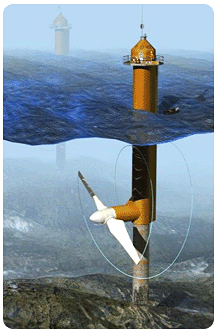
Technology to generate electricity by rotating the huge-sized propeller type turbines installed under the sea |
|
|
|
|
|
|
|
|
|
|
|
|
|
|
|
|
|
|
|
 |
|
| |
|
|
Features |
|
|
| |
Clean and unlimited ocean energy can provide energy on a regular basis. Tidal power generation however can cause floods and affect the marine ecosystem. Also the large-sized facilities can give a negative influence on surrounding environments
Wave force generation is expensive in facility establishment considering the amount of electricity generated, and with the low energy density and the facility located far from end-users. |
| |
|
|
|
|
|